Labels

Thursday, July 13, 2017

Some thoughts not often heard or expressed

The Conservative ‘Resistance’ Is Futile

The right has never made one significant move against the liberal culture machine.

By David Gelernter
Wall Street Journal
July 5, 2017

Democrats, in their role as opponents of President Trump, have taken to calling themselves “the resistance.” But I was startled a few days ago when a thoughtful, much-admired conservative commentator used the same term on TV—casually, as if “the resistance” was just the obvious term. Everyone is saying it. It’s no accident that the left runs American culture. The right is too obsessed with mere mechanics—poll numbers and vote counts—to look up.
“Resistance” is unacceptable in referring to the Trump opposition because, obviously, it suggests the Resistance—against the Nazis in occupied France. Many young people are too ignorant to recognize the term, but that hardly matters. The press uses it constantly. So when a young innocent finally does encounter the genuine French Resistance, he will think, “Aha, just like the resistance to Trump!” And that’s all the left wants: a mild but continuous cultural breeze murmuring in every American ear that opposing Trump is noble and glorious. Vive la Résistance!
This abuse of “the resistance” happens everywhere. Many Republicans hate Mr. Trump and love to denounce him—which lets them show their integrity and, sometimes, a less-praiseworthy attribute too.
Many intellectuals think Mr. Trump is vulgar. That includes conservatives. They think he’s a peasant and talks like one. Every time he opens his mouth, all they hear is a small-time Queens operator who struck it big but has never had a proper education, and embarrasses the country wherever he goes, whatever he says. It never dawns on them that the president can’t stand them any more than they can stand him. Yet they expect him to treat them with respectful courtesy if he ever runs into them—as he should, and on the whole does. Conceivably they should treat him the same way.
Conservatives regret the collapse of authority, dignity and a certain due formality in the way Americans treat each other. They are right to complain when any president diminishes his office. Mr. Trump ought to think more seriously about what he owes the great men among his predecessors, and the office itself. But it’s not clear that commentators make things any better when they treat the president himself like a third-rate clown.
I’d love for him to be a more eloquent, elegant speaker. But if I had to choose between deeds and delivery, it wouldn’t be hard. Many conservative intellectuals insist that Mr. Trump’s wrong policies are what they dislike. So what if he has restarted the large pipeline projects, scrapped many statist regulations, appointed a fine cabinet and a first-rate Supreme Court justice, asked NATO countries to pay what they owe, re-established solid relations with Israel and Saudi Arabia, signaled an inclination to use troops in Afghanistan to win and not merely cover our retreat, led us out of the Paris climate accord, plans to increase military spending (granted, not enough), is trying to get rid of ObamaCare to the extent possible, proposed to lower taxes significantly and revamp immigration policy and enforcement? What has he done lately?
Conservative thinkers should recall that they helped create President Trump. They never blasted President Obama as he deserved. Mr. Obama’s policies punished the economy and made the country and its international standing worse year by year; his patronizing arrogance drove people crazy. He was the perfect embodiment of a one-term president. The tea-party outbreak of 2009-10 made it clear where he was headed. History will record that the press saved him. Naturally the mainstream press loved him, but too many conservative commentators never felt equal to taking him on. They had every reason to point out repeatedly that Mr. Obama was the worst president since Jimmy Carter, surrounded by a left-wing cabinet and advisers, hostile to Israel, crazed regarding Iran, and even less competent to deal with the issues than Mr. Carter was—which is saying plenty.
But they didn’t say plenty. They didn’t say much at all. The rank and file noticed and got mad. Even their supposed champions didn’t grasp what life under Mr. Obama was like—a man who was wrecking the economy while preaching little sermons, whose subtext was always how smart he was, how dumb they were, and how America was full of racist clods, dangerous cops and infantile nuts who would go crazy if they even heard the words “Islamic terrorism.” So the rank and file was deeply angry and elected Mr. Trump.
Some conservatives have the impression that, by showing off their anti-Trump hostility, they will get the networks and the New York Times to like them. It doesn’t work like that. Although the right reads the left, the left rarely reads the right. Why should it, when the left owns American culture? Nearly every university, newspaper, TV network, Hollywood studio, publisher, education school and museum in the nation. The left wrapped up the culture war two generations ago. Throughout my own adult lifetime, the right has never made one significant move against the liberal culture machine.
So go ahead, proclaim it from the rooftops: the anti-Trump opposition is a virtual French Resistance! If we’re not going to fight anyway, let’s surrender and get it over with.

Mr. Gelernter invented Lifestreams, the first social network.

The Battle Continues

Trump Is Winning His War on Washington

Conrad Black
The National Interest
June 14, 2017

It is easy to forget that the credibility battle between President Trump and James Comey is just the latest round in Donald Trump’s long struggle to overwhelm, single-handedly at first, the entire national political power structure. No one who followed closely really believed that the war was over on election night. The Democrats contested some local results, very unsuccessfully, and then, in their stark disbelief, took out television advertisements reaching tens of millions of people to ask some of the 538 people elevated to the electoral college to break their pledges and vote for Hillary Clinton instead of Donald Trump. It was an absurd fiasco. Democratic Senate leaders Chuck Schumer and Richard Durbin made prodigious efforts to block virtually every nominee of the incoming administration to high office. Apart from knocking down Trump’s first candidate for labor secretary, their only achievement was delay and harassment.
From the day after the election, Clinton fabricated the contention that, first among all those responsible for her defeat (among whom she never counted herself) were the Russians. This wild allegation was first advanced by John Podesta, the Democratic campaign chairman. It was then amplified by former Senate leader Harry Reid, and then Clinton got the bit in her teeth. Alleging collusion between the Russian government and the Trump campaign quickly became the favorite theme of Democratic leaders in Congress and the vast gallery of Never Trump fanatics in the national media, their ranks swollen and made more raucous by the self-exiled snobs of the intellectual conservative movement.
Since Trump had gone to war against all factions of both parties—Hollywood, Wall Street, the national media, academia, the lobbyists and the bureaucracy—there could not be a honeymoon, merely a few pleasantries on Inauguration Day, like a Christmas truce on the Western Front in World War I, followed by the resumption of hostilities. The outgoing Obama administration helpfully conducted surveillance of Trump Tower, and unmasked and leaked to the press the names of prominent Republicans that had arisen in these dubious practices, but no evidence was found.
The Russians jubilantly exploited the near anarchy among Washington’s political and media elites through an imaginative campaign of disinformation. Meanwhile, the upper reaches of the Washington civil service became spigots of malicious and almost certainly criminal leakage to the Trumpophobic press.
Every charge, no matter how fantastic, against the incoming president was given immense play by the morally bankrupt, unrelievedly partisan mainstream media, led by the New York Times, Washington Post, CNN, MSNBC, CBS, ABC and NBC. All of these outlets had gagged on election night, and all of them refused to accept the legitimacy of the new administration.
There had never been an argument to reelect the Democrats on the merits of the largely failed Obama administration, so their entire campaign was a smear job on Trump. This continued with the Russian collusion scam and as soon as the administration was in place, with the nonsense about racism over the partial travel ban. (The Supreme Court will almost certainly take immigration back from the district and circuit courts and restore it to the president.) Donald Trump hardly made his task easier by some of the bumptious and tasteless comments that he made as this war unfolded. He has generally held the support of his followers, who understood that his assault upon the political establishment was so comprehensive that it would require a full term to implement. Those well acquainted with the key Democratic personalities in Washington confirm that they realize they have absolutely nothing to work with for an impeachment, but are aiming at the immobilization of the regime until the midterm elections of 2018, when the Democrats will try to retake at least part of the Congress against a do-nothing, blustering government.
Trump has fought like a fearless but calculating fighting bull. His greatest problem is not spurious charges or media hostility, which is not uniform and provokes a heavy backlash, but the cowardice of congressional Republicans. Most of them are in the Washington sleaze factory Trump initially attacked, but they owe their majority and the House’s repeal of Obamacare to the president. Speaker Paul Ryan was unable, as the appointment of a special counsel was announced, even to allow the president a presumption of innocence, and confined himself to declining “to prejudge” the outcome. Soon, they will have to realize that the anti-Trump campaign is just a mudslide, and that their only chance of retaining control of the Congress is to pull together and put through the president’s radically sensible program.
The firing of FBI director James Comey (apparently for needlessly dragging out the Russian collusion business), his appearance before the Senate intelligence committee last week and Trump’s press conference the following day have all torqued up the war to new heights of acrimony. But Trump is finally winning: even relatively unbiased commentators have failed to note how one-sided the exchange has been, though the comparisons with Richard Nixon’s firing of Archibald Cox—like the collusion charge itself, the complaints of an attempted back channel between the Russians and the president’s son-in-law, and the charge of misuse of Israeli intelligence (denied by Israeli prime minister Netanyahu)—have vanished, almost forgotten.
Comey conceded that he did not object when former attorney general Loretta Lynch told him to refer to the Clinton investigation as the Clinton “matter.” He admitted—as Trump had claimed, Comey had not previously acknowledged and the press failed to publish—that even after many months of investigation, Trump was not suspected of collusion with the Russians. He acknowledged that while Russia had tried to interfere with the election, there was no evidence that their efforts had changed any votes. He admitted that he had leaked his hotly contested version of a conversation with the president, about the investigation of former national security advisor Gen. Michael Flynn, in order to prompt the appointment of a special counsel. He did attack the media, and generated a retraction at CNN and extreme evasions by the New York Times.
No one is satisfied with Comey’s explanation of why he took it upon himself as a police chief to recite Clinton’s likely offenses with her emails, and then declare that she should not be prosecuted, which was not his decision to make; nor why he reopened and then quickly closed the “Clinton matter” in the last week of the campaign.
In all of these areas, there is little argument that Comey exceeded the powers of his position, and compromised the political impartiality and integrity of the bureau.
The chief takeaways are that the Russian collusion argument against Trump is dead, and that the obstruction argument is reduced to trying to claim, as no sane prosecutor would, that the president’s unwise and inconsequential expression of a hope that Flynn would not be prosecuted constituted an obstruction of justice. The chances of getting any traction on this issue are also zero. Even the endless brayings of Schumer, and Adam Schiff and Mark Warner, (the sanctimonious congressman from Hollywood and the vice chairman of the Senate intelligence committee), may have to be modulated—to the acoustical relief of the nation. There is little chance that Special Counsel Robert Mueller will find anything that significantly embarrasses the president.

Donald Trump has won this round, but the war will continue for a while longer.

Thursday, April 6, 2017

One more sign that liberals have lost their mind

Powerline Blog - POSTED ON APRIL 4, 2017 BY JOHN HINDERAKER
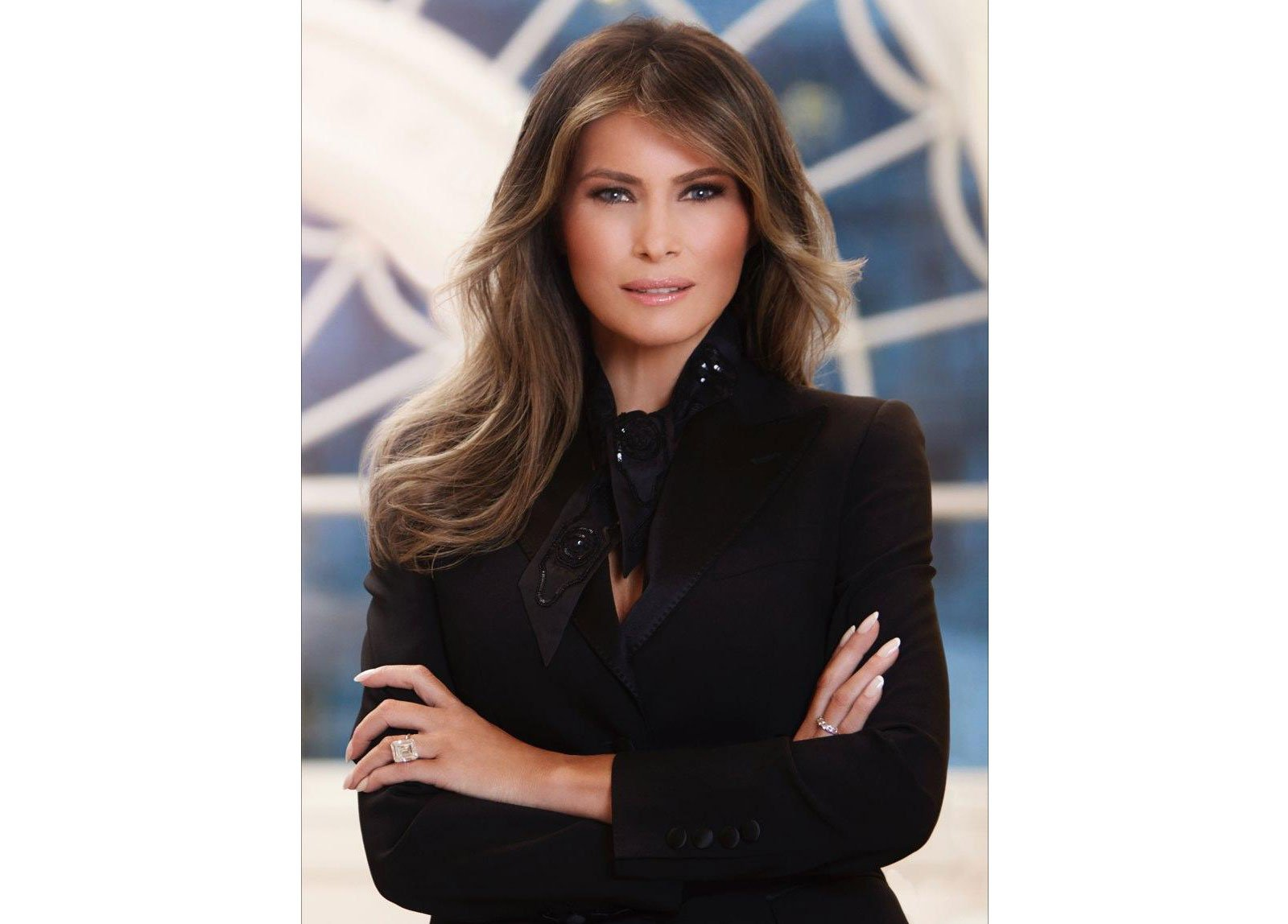
The White House has just released an official portrait of Melania Trump. It is beautiful, in my opinion. But the left-wing Boston Globe somehow found something sinister in what any normal person would consider a lovely portrait:
The White House released an official portrait of Melania Trump. So what’s with the crossed arms? http://bos.gl/kZspjrx Yeah, what’s with the crossed arms? How weird can you get? No other White House would dream of putting out an official oil or photo portrait of someone with his or her arms crossed. We all know what that means! Right, fellow Democrats? RIGHT??21caucus_obama1-blog480Oops. Never mind...
http://www.powerlineblog.com/archives/2017/04/one-more-sign-that-liberals-have-lost-their-minds.php

Wednesday, April 5, 2017

One way or another, confirm Judge Gorsuch


Chicago Tribune - April 5, 2017

Judge Neil Gorsuch, a thoughtful conservative who is President Donald Trump's nominee for the Supreme Court, likely wins Senate confirmation this week. The question is under what terms: conventional or nuclear? With American democracy unscathed or, um, scathed?
Our hope, now fading, is that Gorsuch gets to the high court the old-fashioned way — confirmed with the support of at least 60 senators, including several Democrats. There's something assuring, not to mention refreshingly constitutional, about senators from both sides of the aisle coming together to fulfill their responsibility to provide "advice and consent" on judicial nominations. Since Gorsuch, who's been on the federal bench for a decade, clearly is qualified, he should be confirmed — by Republicans and Democrats.
If only. In Washington, Republicans and Democrats will go to extremes to win their battles and damage the other side, even if that means attacking the ideal of compromise that should define effective bipartisan governance. The Gorsuch nomination is a crucial test for the Senate because there's more at stake than a vote on an individual Supreme Court seat. There is also the preservation of an honorable system for doing the people's business. The Senate stands at the brink of abandoning this important democratic practice of reasonable cooperation on judgeships.
Here's why: When the full Senate votes on confirmation, Gorsuch appears set to receive all 52 Republican votes, but his nomination has no direct path to a super-majority of 60 because there are not eight Democratic and independent senators willing to join. That fact became clear Monday when the Senate Judiciary Committee approved Gorsuch's nomination on a party-line vote but the 41st Democrat came out against the nominee.
Without 60 votes for confirmation, Democrats can filibuster, effectively icing the Gorsuch nomination — unless Republicans invoke the extreme measure of changing Senate rules governing Supreme Court confirmations. Under this so-called nuclear option, Senate Majority Leader Mitch McConnell could push through a straight majority vote to deliver the high court seat to Gorsuch. That's probably what he'll do.
They don't call this the "nuclear option" for nothing, though. The Senate has never experienced a partisan filibuster to block a Supreme Court justice, so there's never been a case of a majority party blowing up Senate rules to circumvent minority party opposition to a high court appointment. Supreme Court nominations have been withdrawn, and the 1987 nomination of Judge Robert Bork was defeated, but when the vote's up for grabs, the Senate has found a way to do the responsible thing. The late Justice Antonin Scalia, an arch-conservative whose seat Gorsuch would fill, was confirmed with 98 votes. Justice Ruth Bader Ginsburg, a liberal, got 96 votes. Those were the days: politics, the art of the possible.
This sorry confrontation over Gorsuch has direct roots in a 2013 action by Senate Democrats. Then-Majority Leader Harry Reid deployed the nuclear option to crush Republican dissent over some presidential nominations. President Barack Obama endorsed Reid's move, blaming Republican obstructionism that "just isn't normal." Funny how hyper-partisanship is starting to look more normal every day.
Democrats say Gorsuch doesn't deserve the Supreme Court seat because they believe he'll allow his political convictions to color rulings from the bench. He gave a strong defense of his judicial philosophy and commitment to the Constitution, but of course declined to discuss specific cases to avoid accusations of being prejudicial. Democrats characterized his caution — similar to that of several sitting justices during their confirmation hearings — as evasiveness. The Democrats weren't ever going to go easy on Gorsuch, though, and much of that blame sits with Republicans. Last year they refused to even hold a nomination hearing for Judge Merrick Garland, Obama's choice to succeed Scalia.
This time it's a Republican president whose legitimate pick for the Supreme Court is hung up by Democratic rancor. If the only option is nuclear, the Republicans will take it. And you can bet Democrats won't forget. That's how we got here: revenge instead of compromise, destruction over cooperation, an escalating cycle of win-at-all-costs cynicism.
Senators, all of you know that Gorsuch will be a good justice. He deserves to be confirmed — and likely will be. If you also quash the filibuster, that's on you.

Thursday, February 16, 2017

Conrad Black is usually a keen observer of political trends


Atmosphere for Trump Will Start To Lighten As Democrats Grapple With Changes in Policy
By Conrad Black, Special to the New York Sun,  February 15, 2017

The preliminaries of the Trump presidency are ending, and difficult though it is to appreciate, the atmosphere is lightening somewhat. It is a little early to opine on the Trump foreign policy, but his first three visits from other government leaders have gone well. He did brilliantly saying publicly to the British leader, Theresa May, that “a strong and independent Britain is a blessing to the world” — a stirring contrast to Obama’s threat, delivered in London, to put Britain “at the back of the queue” if it left the European Union.
President Trump’s conversations with the Japanese prime minister, Shinzo Abe, seemed to go well also, as have conversations with the Chinese president. Comparisons between the Trump references to “America First” and the pre-war isolationist movement led by Colonel Charles Lindbergh have died away, as has most of the alarmist nonsense about Donald Trump. It is no longer possible to frighten the children of America with suggestions that Trump is a reckless warmonger.
The exchange with Canada’s Justin Trudeau was virtually a love-in, as was the remarkably cheerful joint press conference of Mr. Trump and Prime Minister Netanyahu. It remains to be seen what will come of the “notice” that departed national security adviser General Michael Flynn gave the Iranians, but the president will pick his time and send a starkly different message to the groveling to Tehran of his predecessor.
Ah absurd overreaction to the executive order on admission of people from seven terrorist-wracked or terror-sponsoring states, which have been identified as such by President Obama, is subsiding. The administration will practice enhanced screening at point of processing, and may issue a new order; and presumably, when the vacancy is filled and cant and emotionalism have subsided, will ask the Supreme Court for a reference on the constitutional point of the president’s prerogatives in immigration matters. The partisan publicity-seeking mischief of the Washington State government and a Seattle federal judge cannot be allowed to stand, even on a moot point (if the present order is superseded).
Allegations of racism have died in all but psychotic political environs; the bunk about misogyny finally vanished altogether with the joint meeting on Monday with Canada’s Trudeau to promote women executives. The succeeding fatuity about Trump’s being an autocrat has wobbled away as he has indulgently abided by the antics of the Seattle district judge and the flaky Ninth Circuit in San Francisco (a court that has seen 86 percent of recent appeals from it to the Supreme Court meet with success).
His cabinet is inching through the confirmation process, protracted by mindless Democratic obstructionism. The Democrats must have scraped the bottom of the barrel with Senatory Schumer’s sniveling over the entry ban, Elizabeth Warren’s threats of individual vengeance on all 52 senators who approved Senator Sessions as attorney general, and Representative Maxine Waters’s attack on Trump for tolerating the Russian “invasion of Korea.” The Democrats have almost run through the Saul Alinsky playbook of demonization and harassment, and the president’s children and a grandchild are the latest targets, but no significant part of public opinion will support such sleaze. (It seems like only yesterday that Hillary was saying “When they go low, we go high.”)​
The reality that Mr. Trump is president, is not going to be impeachable, and is substantially unstoppable, is seeping into the Democratic mind. There is now a health-and-human-services secretary (Tom Price) sworn to remake Obamacare and extend it; an education secretary (Betsy DeVos) who opposes the teachers’ unions and supports private alternatives to the state school system they have desecrated; and a Treasury secretary (Steven Mnuchin) who will present a comprehensive reform of taxes. A director of the Environmental Protection Agency who is skeptical about climate change (Scott Pruitt) appears safe enough for confirmation, though Mr. Trump’s nominee for labor secretary (Andrew Puzder, who is critical of much of the union leadership, while being supportive of working people) withdrew Wednesday afternoon over a variety of issues.
But the great political battle is about to shift to the attempted enactment of Donald Trump’s long-promised legislative assault on what he considered the rottenness of the entire political governing class and system. Health-care reform and tax reform are the first priorities, and comprehensive bills, if adopted, would erase what little there is of a domestic Obama legacy and improve upon it, and would incentivize the return of trillions of dollars of retained profit of American companies overseas, sharply reduce corporate-income taxes, and reduce taxes on modest incomes.
American corporate-income taxes are the highest of any advanced country, and it is a testament to the leftist dogmatism or simple complacency of the mainstream American media that there was so little agitation over the last 20 years for revisions to the tax code that would promote reinvestment of earnings in the United States. Historians of the future will wonder how the United States managed to be both overtaxed and chronically debt-ridden. There has been no shortage of advice from intelligent economic commentators, such as Martin Feldstein and Larry Kudlow, about how to structure tax reform, and the consensus of Republican economists seems to be that it is so complicated that it should be divided in two — with a stimulation of some cuts, fiscal enticement of patriation of foreign profits, and an infrastructure fund now; and more-comprehensive reform later.
With great trepidation, I think that the momentum of the election victory and the installation of such a radically reformist Cabinet must be exploited while the Democrats are still reeling, and torn between impressing their base in Hollywood, the media, academia, the militant feminists, and minorities (an awkward coalition of rich and poor with only patches among the working and middle classes) and bridge-building with the moderate-conservative majority.
While the extreme acrimony of the late campaign and the antagonism between Mr. Trump and the conventional media have ensured that there has been no honeymoon, there is still novelty and the expectations of the Trump supporters. The president is running well ahead of the Democrats in the polls, has twice the approval rating of the Congress, which has risen since the end of gridlock, and three times the approval rating of the media. If he can produce a tax system that enriches the lower-income families while spurring business reinvestment, he can generate between 3% and 4% percent economic growth, which would itself reduce the deficit by $400 to 500 billion a year.
Some taxes on elective spending and transactions would eliminate the rest of the deficit. This appeared to be the carrot he held out to a group of visiting bankers a few days ago — some higher taxes on Wall Street but sharply reduced regulation. Most of Dodd-Frank and much of Sarbanes-Oxley, and a great deal of additional superfluous regulation, should go.
The Obama war on business and the (Hillary) Clinton ambition to flatline the economy by making the voting majority of Americans members of some category of benefit recipient would go with it. It will be a mighty accomplishment if Donald Trump can bring the country back from President Obama’s plan to “spread the wealth around” by increasing the size of the public sector and forcing more people into forms of welfare, and refocus it on the entitlement of people to their incomes, as surely as they are entitled to enjoyment of their property — tempered only by the need to provide what the government must have to function, as opposed to buying votes with public money and inciting class warfare.
If at the same time, or right on the heels of it, he can produce a health-care plan that is universal, but based on tax credits for those with adequate incomes, and assistance for those who do not, he will have ended 20 years of stagnant, mainly gridlocked government. He will also coopt the entire center of the political ground. At the same time, he will have assisted the moderate Democrats to regain control of their party and make it again a centrist reform party capable of governing without reducing the country to shambles, as it did under LBJ, President Carter, and Mr. Obama. At that point, the popularity of the administration will cow even the more overwrought sectors of the media.
The confected hysteria is subsiding, and Democrats must now face the fact that many of their cherished mistaken policies are about to be torched and the ashes dispersed over the country. Mr. Schumer, Minority Leader Pelosi, and the rest will soon have to decide whether to make a course correction, and show some tactical maturity, or hurl themselves like grieving widows in colonial India on the funeral pyre of the fools’ socialist paradise they have been promoting for 15 years.

Saturday, December 3, 2016

Friday, December 2, 2016


Democrats Send Their Regrets  😊

Kimberley A. Strassel
Wall Street Journal
Dec. 1, 2016

Regrets? Delaware Sen. Chris Coons has a few—and not too few to mention. At the top of his list is his party’s decision in 2013 to blow up the filibuster for most presidential nominees.
“Many of us will regret that in this Congress,” a dejected Mr. Coons told CNN on Tuesday. “Because it would have been a terrific speed bump, potential emergency brake, to have in our system to slow down the confirmation of extreme nominees.”
Cue Sinatra and “My Way.” That’s how former Senate leader Harry Reid, House Democratic leader Nancy Pelosi and President Obama ruled for eight years. They planned each charted course, each careful step. Now, they’re not finding it so amusing.
Mr. Coons is regretting giving up his tool to stop Donald Trump’s march of reformers. It’s a cabinet parade of charter-school-lovers, and law-and-order prosecutors and tax-cutters and ObamaCare-slayers, of the sort to give a good Delaware liberal night sweats. There was a day when not one of these nominees could have hoped to squeeze past a Senate filibuster. But Mr. Reid did it his way, and Mr. Trump keeps tweeting.
Former veep candidate Tim Kaine in October threatened that Republicans would be really, really sorry if they tried use what filibuster tools were left against a Hillary Clinton Supreme Court nominee. If Republicans “stonewall,” then a “Democratic Senate majority will say we’re not going to let you thwart the law,” he declared in October. Incoming Senate Democratic leader Chuck Schumer is now regretting that belligerence, and insisting that the Supreme Court filibuster is inviolate, and that his party never did kill it, you know, and that should count for something, and . . . blah, blah, regrets.
It would be hard to stall the confirmation process, at least after Minnesota Sen. Amy Klobuchar’s regretful September news conference, the one where she stood tall and hit Republicans for refusing to confirm Mr. Obama’s end-of-the-road nominee, Merrick Garland. “This is not just some TV show [like] ‘Eight is Enough.’ Eight is not enough on the United States Supreme Court,” she railed. She’s joined in regret by the activists behind those trendy Twitter campaigns: #weneednine. #doyourjob. Bring on Mr. Trump’s own Tweetbomb: #likeyousaid.
Mr. Schumer is also regretting those dozen interviews before the election, the ones he gave as he measured his majority-leader office curtains. He explained to Politico that his party was on the verge of electoral dominance and that this meant it would have “a mandate.” He elsewhere warned all those mulish Republicans that they’d have an obligation to work with his world-dominant party. “If we’re gridlocked for another four years, the anger and sourness in the land will make that of 2016 seem tame,” he lectured.
Some might describe electoral dominance as owning the White House, and the Senate, and the House, and 33 governorships and 68 (of 98) state legislative chambers. But Mr. Schumer now regrets his definition. In a recent ABC News story, he said Mr. Trump’s victory is “not a mandate” and that his Democratic Party remains free to “go after him tooth and nail.”
At least 11 senators, led by Oregon’s Jeff Merkley would appear to regret staying silent while Mr. Reid pioneered the art of hateful speech—routinely calling opponents un-American, tax cheats, liars, losers, tools, first-class rats, and embarrassments. How else to read the senators’ recent letter to Mr. Trump complaining that he’s a big meanie? Meanies do as meanies see, and Mr. Merkley never said a peep as Mr. Reid set a new low standard for public behavior.
House Democrats, those with a brain, now regret that they didn’t can Nancy Pelosi when they could—say, back in 2010. After the liberal Mrs. Pelosi was this week elected leader again, in a rout, Arizona Rep. Kyrsten Sinema complained, and not in a shy way, that her party was doubling down on its “failed strategy of recent years.” But Ms. Sinema did nothing two years ago when Mrs. Pelosi ran unopposed after her third-straight House loss.
The entire Democratic Party is regretting its call for masses of infrastructure, now that there are indications Mr. Trump won’t do it their way. It is regretting it refused to work with Republicans on important bills, now that it’s not likely to get asked.
More than a few Democrats are regretting listening to that piper of the alt-left, Sen. Elizabeth Warren, who danced them into indefensible voting records. That regret was on display this week when—despite Ms. Warren having railed against a medical-innovation bill as a giveaway to Big Pharma that made her “gag”—every member of her Massachusetts delegation voted with House Republicans to pass it. In fact, 174 Democrats ignored Ms. Warren.

Let’s hope that’s because now—as the end is near, as Mr. Obama faces his final curtain—at least some have had their share (and fill) of losing. Maybe “my way” wasn’t so smart after all.